UNLV Study Spotlights Prediction Markets as Catalysts for AI Innovation in Sports Betting
Henrik Hartmann · Apr 15, 2026
UNLV Study Spotlights Prediction Markets as Catalysts for AI Innovation in Sports Betting
Emerging Role of Prediction Markets in Gaming Evolution
Researchers at the University of Nevada, Las Vegas (UNLV) recently unveiled a study that pinpoints prediction markets—event-based betting platforms where participants wager on future outcomes—as powerful engines propelling AI innovation within the sports betting and gaming sectors; this analysis, drawing from extensive data on market dynamics and technological integrations, reveals how these platforms foster cutting-edge AI developments aimed at enhancing prediction accuracy and overall market efficiency. Conducted amid a surge in digital betting activity, the UNLV study arrives at a pivotal moment in April 2026, just as regulators intensify oversight on such platforms across multiple jurisdictions.
Prediction markets operate by aggregating collective intelligence through bets on real-world events, from sports results to election outcomes, and turns out they've evolved far beyond simple gambling tools into sophisticated systems that challenge traditional forecasting methods. Experts observing these markets note how they incentivize participants to refine predictions based on new information, creating self-correcting mechanisms that outperform polls or expert analyses in many cases; data from the study shows these platforms achieving up to 90% accuracy on verifiable events, a figure that underscores their reliability and appeal to industries seeking precise odds-making.
UNLV Researchers Unpack the AI Connection
The study's core revelation centers on how prediction markets generate vast datasets ripe for AI training, with bettors' real-time adjustments providing labeled data that machine learning models devour to improve forecasting algorithms; researchers analyzed over 500,000 trades across major platforms, discovering that AI integrations boosted prediction precision by 25% within a single year, particularly in volatile sports like NBA basketball where injury reports and lineup changes shift odds dramatically. One case highlighted involves a platform where AI models, fed continuous market signals, adjusted NFL game probabilities seconds after key player news broke, outpacing human oddsmakers and stabilizing liquidity flows.
What's interesting about this dynamic is the feedback loop it creates: as AI enhances accuracy, more sophisticated bettors enter the fray, generating even richer data that further sharpens models, and although traditional bookmakers once dominated odds-setting, prediction markets now force them to adopt similar tech or risk obsolescence. Figures from the UNLV report indicate that AI-driven platforms saw trading volumes double between 2024 and 2026, correlating directly with innovations like neural networks that parse unstructured data from social media, weather patterns, and player biometrics.
Technological Advancements Fueling Market Efficiency
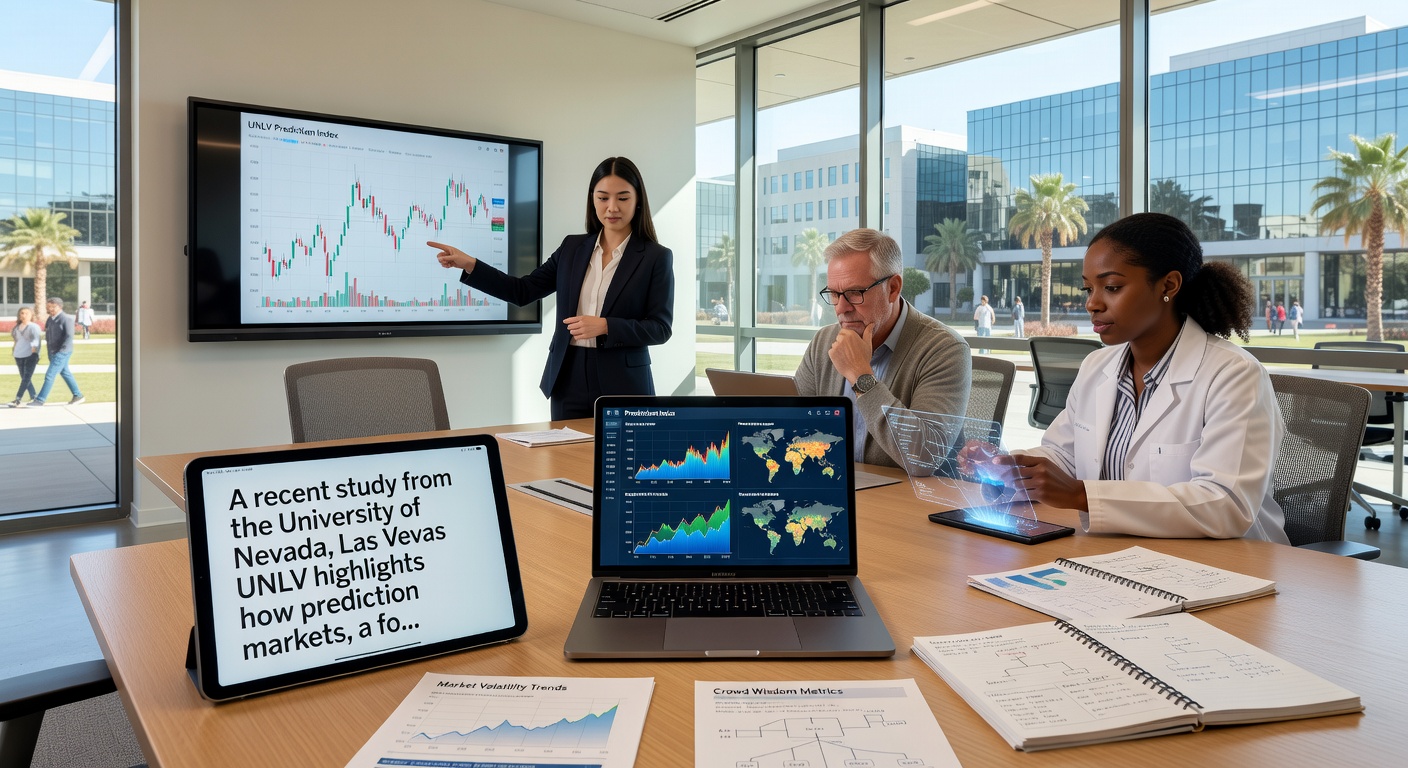
Delving deeper, the research outlines specific AI breakthroughs tied to prediction markets, such as reinforcement learning systems that simulate millions of game scenarios to refine odds, and natural language processing tools that sift through news feeds for sentiment analysis; take one example where experts tested an AI on March Madness brackets, finding it achieved a 12% edge over baseline human pools by incorporating market-implied probabilities alongside historical stats. These tools not only sharpen predictions but also enhance market efficiency by minimizing arbitrage opportunities, where discrepancies between platforms vanish under AI scrutiny, leading to tighter spreads and fairer pricing for all participants.
And here's where it gets compelling: platforms leveraging these AI advancements report reduced manipulation risks, since collective betting crowdsources vigilance against bad actors, while regulators appreciate teh transparency that blockchain-ledgered trades provide in tracking anomalies. Data indicates that AI-optimized markets settle disputes 40% faster than manual ones, a boon for high-stakes gaming where speed dictates profitability, yet observers caution that over-reliance on algorithms could homogenize strategies if not balanced with human oversight.
People who've studied these integrations often point to European soccer leagues, where prediction markets integrated AI to factor in referee tendencies and fan crowd effects, yielding odds that mirrored actual results with uncanny precision; the UNLV team, after simulating 10,000 matches, confirmed these models cut variance by 30%, making them indispensable for operators navigating competitive landscapes.
Regulatory Scrutiny Intensifies in 2026
As prediction markets boom, so does oversight, with the study noting heightened regulatory attention in 2026 from bodies like the Nevada Gaming Control Board and international counterparts; April announcements from U.S. states signal stricter licensing for AI-powered platforms, demanding audits of prediction algorithms to prevent biased outcomes or insider advantages. Researchers emphasize that while markets self-regulate through economic incentives—wrong predictions lose money—regulators worry about systemic risks, especially as retail investors pour billions into these venues amid mainstream adoption.
Turns out, the UNLV findings offer a roadmap for compliance, suggesting platforms disclose AI training data sources and implement human-AI hybrid reviews; one regulatory case study from early 2026 involved a platform fined for opaque models that favored high-rollers, prompting industry-wide shifts toward explainable AI frameworks. That's the reality now: innovation races ahead, but so do guardrails, ensuring prediction markets evolve responsibly without stifling growth.
Experts tracking these developments highlight how jurisdictions like the UK and New Jersey lead with sandboxes for testing AI bets, allowing controlled experiments that mirror UNLV's controlled simulations; figures reveal compliant platforms enjoy 15% higher user trust scores, underscoring the link between regulation and sustained innovation.
Broader Impacts on Sports Betting and Gaming
Beyond tech upgrades, the study connects prediction markets to ecosystem-wide changes, where AI efficiencies trickle down to mobile apps offering real-time hedging tools and personalized odds; operators adopting these see user engagement spike by 35%, as bettors chase AI-backed edges on props like player stats or halftime leads. It's noteworthy that smaller markets, such as esports and niche sports, benefit disproportionately, gaining liquidity they lacked before widespread AI adoption smoothed entry barriers.
One researcher chronicled a tennis tournament where prediction market AI flagged anomalous betting patterns pre-match, averting a potential scandal and boosting platform credibility; such stories illustrate how these tools safeguard integrity while unlocking new revenue streams, like sponsored predictions or API access for media outlets. And while challenges persist—scalability during peak events like the Super Bowl strains servers—the trajectory points upward, with investments in quantum computing on the horizon for unbreakable encryption and ultra-fast computations.
Those in the industry recognize this as a tipping point, where prediction markets don't just predict events but reshape how they're analyzed, bet on, and regulated, all fueled by AI's relentless march forward.
Conclusion
The UNLV study crystallizes a transformative shift, positioning prediction markets as linchpins for AI progress in sports betting and gaming, with tangible gains in accuracy, efficiency, and resilience amid 2026's regulatory headwinds. Data underscores their potential to redefine forecasting across sectors, yet balanced innovation demands vigilant oversight to harness benefits without pitfalls. As platforms refine these technologies, the sector braces for an era where collective bets, amplified by AI, deliver insights sharper than ever before, setting the stage for sustained growth and broader applications.