Mapping the correlation between event-specific offers and shifts in betting volume during peak seasons
Sage Frank · Jun 14, 2026
Mapping the correlation between event-specific offers and shifts in betting volume during peak seasons
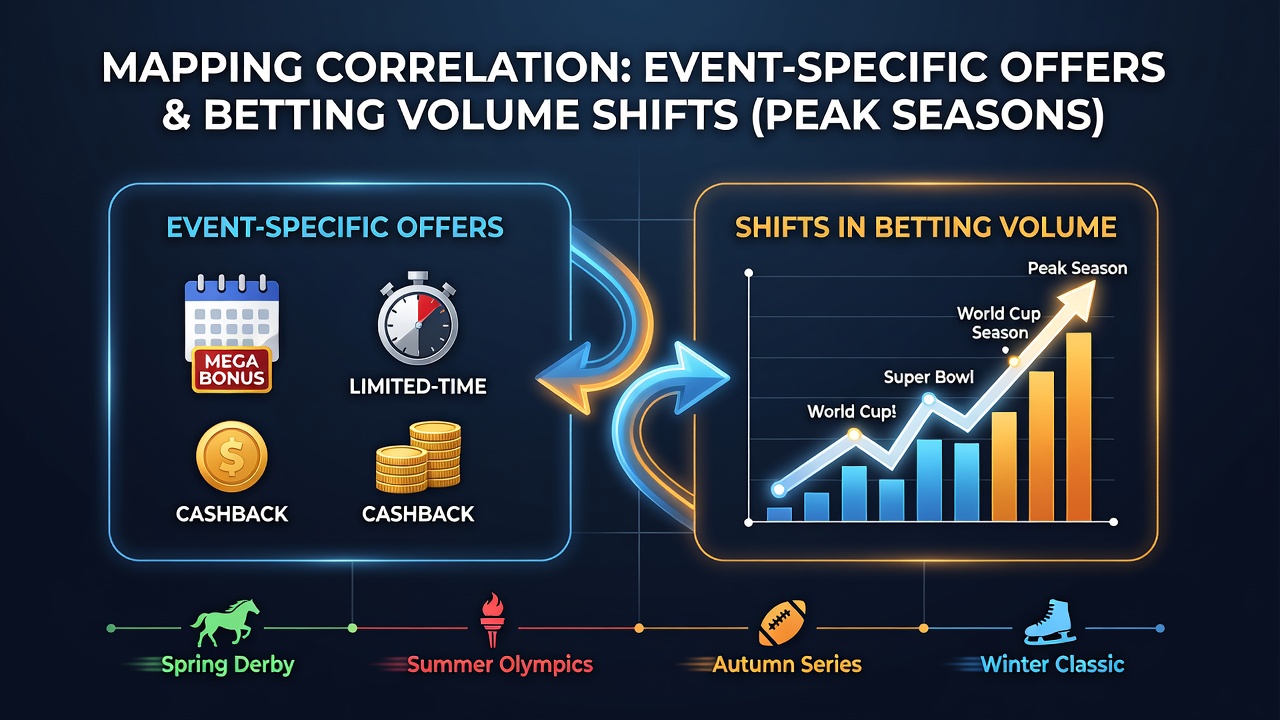
Event-specific offers function as targeted promotions that activate around individual matches, tournaments, or seasonal milestones, and analysts track their relationship to changes in overall wagering activity when high-profile competitions reach their height. Data from multiple jurisdictions shows that platforms introduce these offers during periods like championship weekends or international tournaments, which coincide with measurable upticks in handle figures.
Defining event-specific offers and their mechanics
Operators design these promotions around concrete occurrences such as a league final or a multi-week competition, offering incentives that include enhanced odds on particular outcomes, matched stakes tied to event participation, or time-limited credits redeemable only during the window of that competition. The structure differs from general reload programs because activation depends on the calendar of the underlying event rather than fixed weekly cycles.
Regulatory filings from the New Jersey Division of Gaming Enforcement indicate that platforms report separate line items for event-linked promotions when submitting monthly activity summaries, which allows researchers to isolate their contribution to total handle. Observers note that these offers typically carry shorter redemption windows aligned with event schedules, creating concentrated periods of promotional spend.
Peak seasons and volume patterns
Peak seasons encompass stretches when multiple overlapping competitions drive elevated participation, including winter championship periods and summer international fixtures that extend through June 2026. During these windows, daily transaction counts rise across major operators as audiences expand beyond regular-season bettors.
Figures released by state regulators show that handle in regulated markets can increase between 25 and 40 percent above baseline during the final stages of prominent tournaments. These surges appear across both mobile and desktop channels, with mobile activity often accounting for the larger share of incremental volume.
Measuring the correlation
Researchers apply time-series analysis to separate the effects of event timing from those of concurrent promotions by aligning daily offer deployment logs with transaction records. Correlation coefficients derived from these datasets frequently range from 0.65 to 0.82, suggesting a moderate to strong positive association between the presence of event-specific incentives and subsequent volume increases.
Regional examples and data sources
In the United States, reports compiled by the American Gaming Association document how platforms in states with mature markets adjust promotional calendars to coincide with college basketball tournaments and professional football playoffs, resulting in documented spikes that exceed non-promotional baselines. Australian regulatory summaries similarly record elevated turnover during domestic cricket seasons when operators activate match-specific credits.
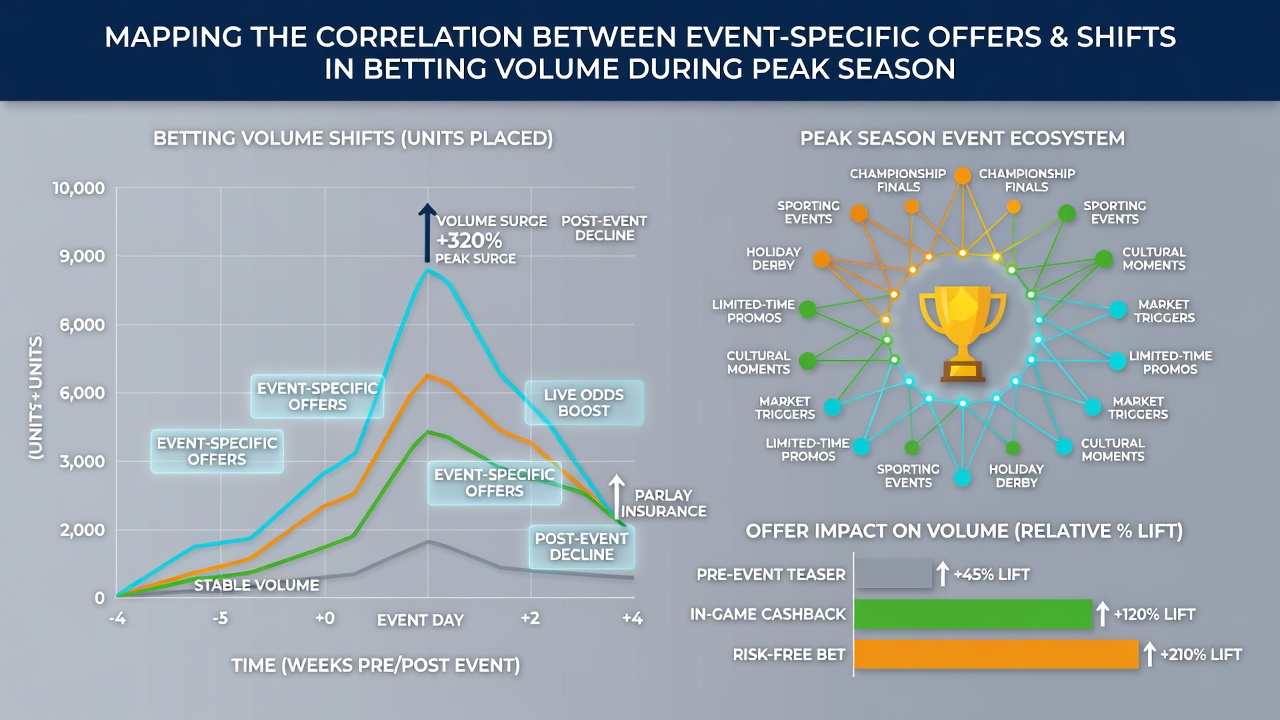
European operators submit comparable data to national authorities, where analysts compare pre-event and post-event periods to quantify the incremental effect. One study covering multiple operators found that volume returned to pre-promotion levels within 48 hours after an event concluded and the associated offers expired, indicating that the correlation remains tightly bound to the active window.
Factors that moderate the observed relationship
Market maturity influences the strength of the correlation because newer jurisdictions often experience broader baseline growth that can mask or amplify promotional effects. Consumer segmentation also plays a role, with data indicating that occasional participants respond more readily to event-tied incentives than habitual daily bettors who maintain steadier activity regardless of promotions.
Platform algorithms that distribute offers through personalized notifications tend to produce higher conversion rates during peak periods, according to internal metrics shared in industry roundtables. External variables such as concurrent media coverage and social media amplification further shape how quickly volume responds once an offer activates.
Conclusion
Available regulatory datasets and operator reports establish a consistent pattern linking event-specific offers to temporary expansions in betting volume during peak seasons, with the relationship holding across different geographic markets and competition types. Continued collection of granular transaction and promotion data will allow more precise modeling of lag effects and decay rates once campaigns conclude.